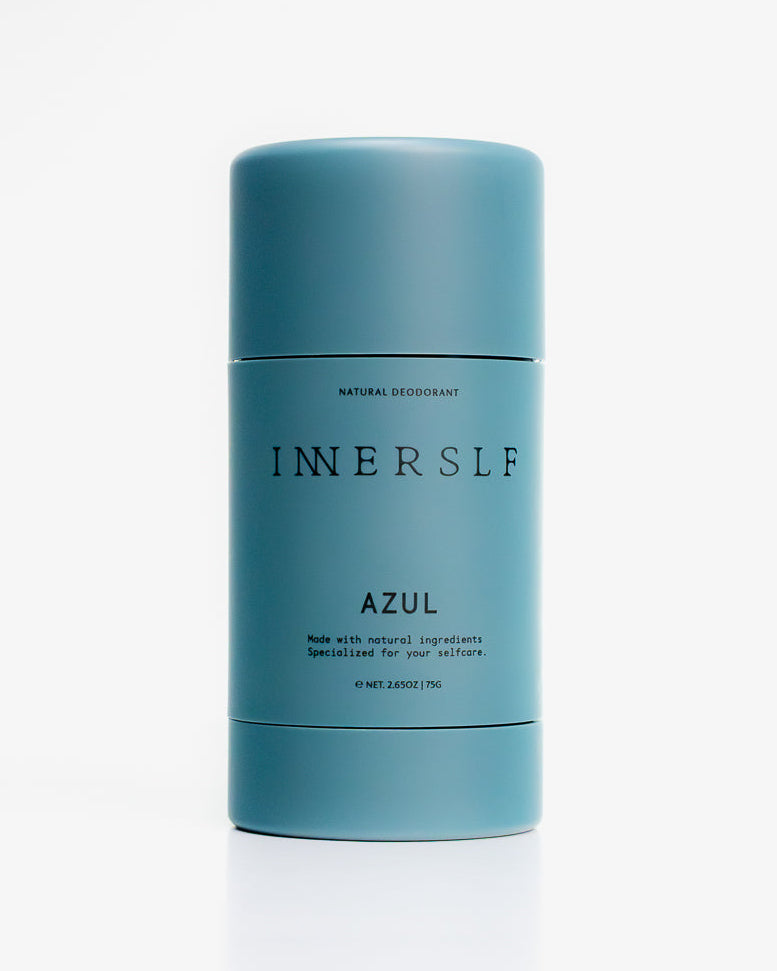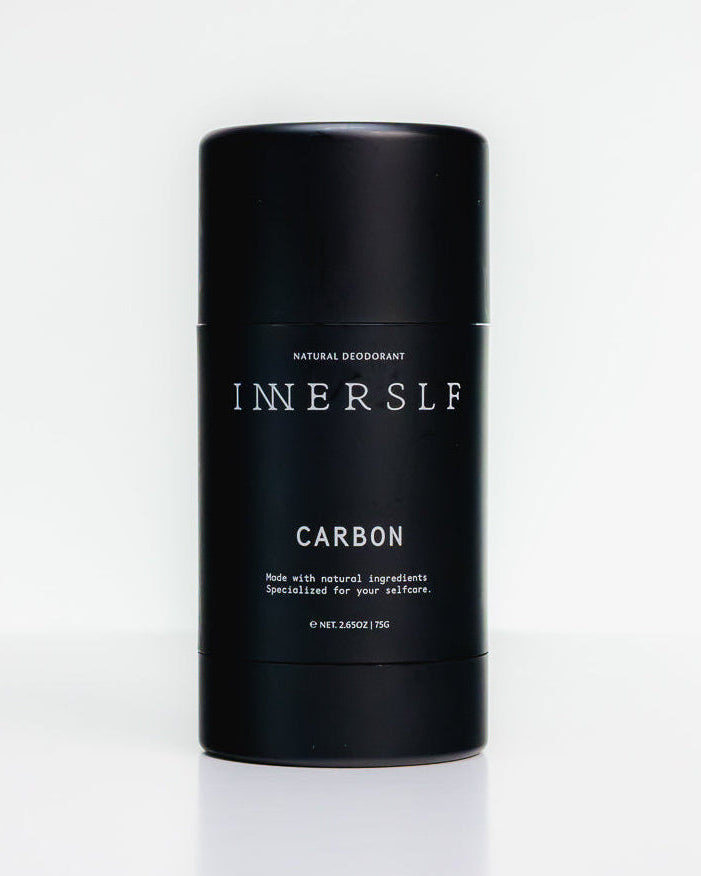
Every scented deodorant is making a choice you're not seeing: where does the scent come from? A plant, or a lab? Both can smell good. They're not the same thing. Here's the honest comparison.
What "natural fragrance" means
Natural fragrance comes from botanical sources — essential oils, absolutes, plant extracts. Eucalyptus oil from the leaf. Geranium from the flower. Blue tansy, peppermint, the actual plants. When you smell INNERSLF's CARBON — eucalyptus and peppermint over charcoal — you're smelling distilled botanicals, not an idea of them.
The characteristics: complexity, evolution, aliveness. Natural scents change on the skin through the day — bright top notes softening into warmer bases — because they're composed of hundreds of compounds interacting with your chemistry. They're also variable: the same oil smells slightly different harvest to harvest. That's not inconsistency. That's agriculture.
What "synthetic fragrance" means
Synthetic fragrance is built from lab-created aroma compounds. Some are copies of natural molecules; some are entirely invented — smells that don't exist in nature. They're precise, consistent, and cheap at scale, which is why most of the deodorant aisle uses them.
The characteristics: loudness, longevity, flatness. Synthetics tend to project harder and last longer — which sounds like an advantage until you realize why: they're designed to be noticed, not to evolve. And the label loophole: a single word — "fragrance" or "parfum" — can legally hide dozens of undisclosed compounds, including phthalates used to make scents cling. You don't know what's in there. Neither does anyone outside the manufacturer's lab.
The honest comparison
| Natural fragrance | Synthetic fragrance | |
|---|---|---|
| Source | Plants | Lab-created compounds |
| Complexity | High — evolves on skin | Lower — flatter over time |
| Consistency | Varies by harvest | Identical every batch |
| Transparency | Traceable ingredients | Often hidden as "fragrance" |
| Cost | Higher | Lower |
| Projection | Skin-close, intimate | Louder, more projecting |
Neither is poison. That's not the argument. The argument is about what you want your scent to be.
Why it matters in deodorant specifically
Deodorant sits on your skin all day, in the warmest zones, inches from your nose. It's the most intimate fragrance you wear — more intimate than perfume, because you don't choose to apply it for effect. It's just there, part of how you smell to yourself and everyone close to you.
That intimacy is the whole case for natural. A synthetic fog you chose at the shelf is fine. A botanical scent that evolves with your skin through the day — that's identity. And when the alternative hides its chemistry behind a single vague word, transparency itself becomes the luxury.
What we chose (and why)
INNERSLF scents are botanical, full stop. Blue tansy and geranium in AZUL — the blue hue comes from the plant itself. Eucalyptus and peppermint in CARBON — crisp because the oils are crisp. Tallow in the base carries the scent the way lipids have carried fragrance for centuries, releasing slowly instead of flashing off.
We pay more for it. The scents vary slightly. We think that's the point — a scent with a source smells like it has a soul, because it does.
The test
Wear a botanical deodorant for a week. Then go back to the synthetic one. You'll notice the difference the way you notice the difference between a live instrument and a recording — same notes, different life.
Your nose knows. Trust it.