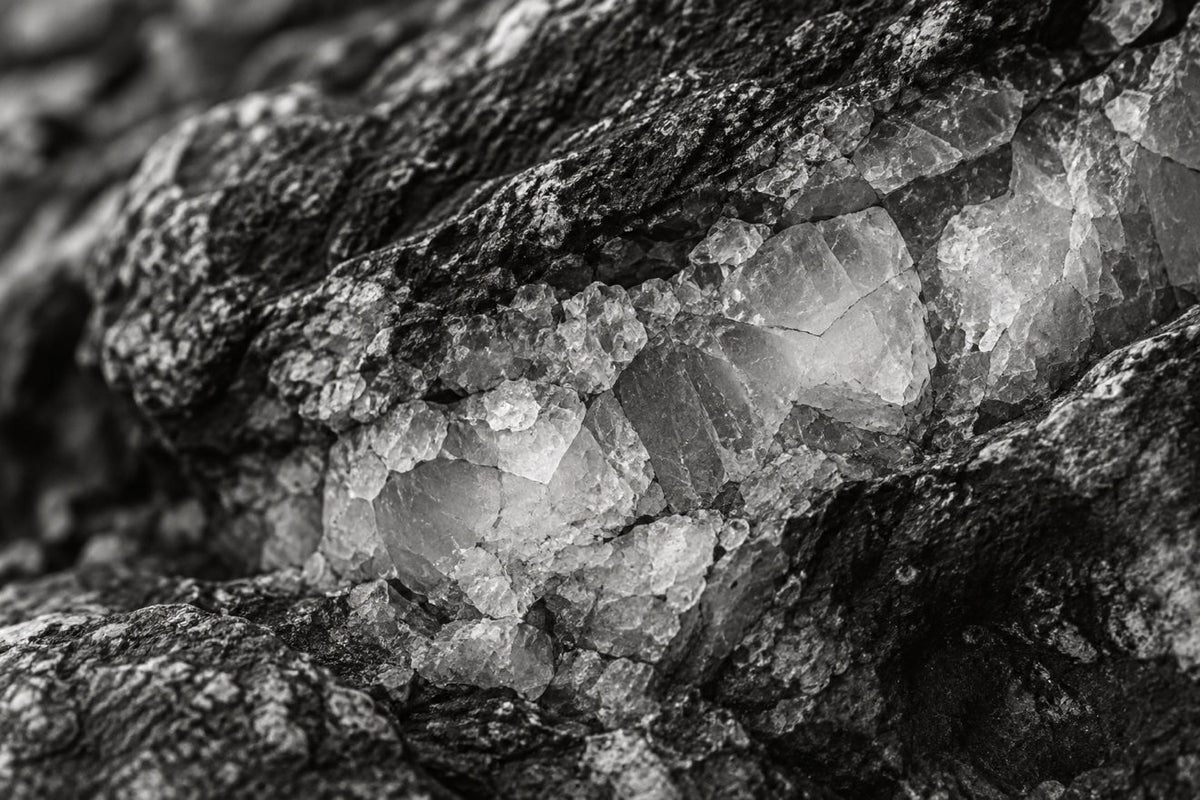
It's the most ancient-looking object in the deodorant aisle: a translucent stone you wet and rub on your underarms. Crystal deodorant has been around for decades, quietly outselling expectations. And now that natural deodorant is booming, the question comes up constantly: stone or stick?
Honest answer, as always.
What crystal deodorant actually is
The "crystal" is potassium alum — a mineral salt. You wet the stone, apply it to damp underarms, and it leaves a thin salt layer on the skin. That layer inhibits the bacteria that cause odor. No fragrance, no white marks, no scent at all. One stone can last a year or more, which makes it the cheapest per-day option in the entire category.
It's simple to the point of elegance. And for a certain person, it's perfect.
Where the stone shines
Minimalism. If your philosophy is "the fewest ingredients wins," nothing beats a single mineral. One ingredient. Done.
No scent, no marks. The salt layer is invisible and fragrance-free. White shirts are safe. Sensitive noses are safe.
Absurd longevity. A single stone lasting twelve months is unmatched economics. Nothing else in personal care comes close.
Travel. It's not a liquid, not a gel, lasts forever — the ideal travel companion by every practical measure.
Where the stick pulls ahead
Odor-fighting power. Potassium alum inhibits bacteria; a formulated natural deodorant neutralizes odor at the source with magnesium hydroxide, absorbs moisture with arrowroot, and cares for skin with coconut oil and aloe. For most people, most days, the formulated stick simply performs at a higher level — especially on hard days.
Moisture management. The crystal does nothing about wetness. It's a salt layer, not an absorbent system. If dampness bothers you, the stone has no answer.
The experience. Wetting a cold stone and rubbing it on is... functional. There's no scent, no glide, no ceremony. A composed stick — tallow glide, botanical scent, thirty seconds of intention — is a different category of morning. Some people don't care about that. We think they're missing something, but we respect the choice.
Consistency. The crystal's performance depends heavily on application — how wet, how much pressure, how damp the skin. Get it slightly wrong and coverage is uneven. A stick is more forgiving: two to three swipes and you're done.
The real distinction
Here's the frame that clarifies everything: crystal deodorant is an ingredient. A natural deodorant stick is a formulation.
The stone does one thing well. The stick does several things in concert — odor neutralization, moisture absorption, skin care, scent composition — because it was designed as a system, not a single note. Neither approach is wrong. But they're not really competing; they're different answers to different priorities.
How to choose
Choose the crystal if: minimalism is the religion, budget-per-day is the metric, and your odor situation is mild. It's honest, ancient, and effective within its lane.
Choose the formulated stick if: you want the full system — real odor control plus moisture management plus skin care plus a scent you'd wear on purpose. That's the lane we built INNERSLF for: magnesium at the core, arrowroot handling moisture, tallow carrying scent, AZUL and CARBON composed like signatures.
The stone is a tool. The stick is a ritual. Pick the one that matches what the morning means to you.


